5 min readRoutinesSleep
School and sleep schedules that kids understand
How to set phone schedules for school days and bedtime that feel fair: what to pause, what to keep, weekends, and how to handle the inevitable “five more minutes”.
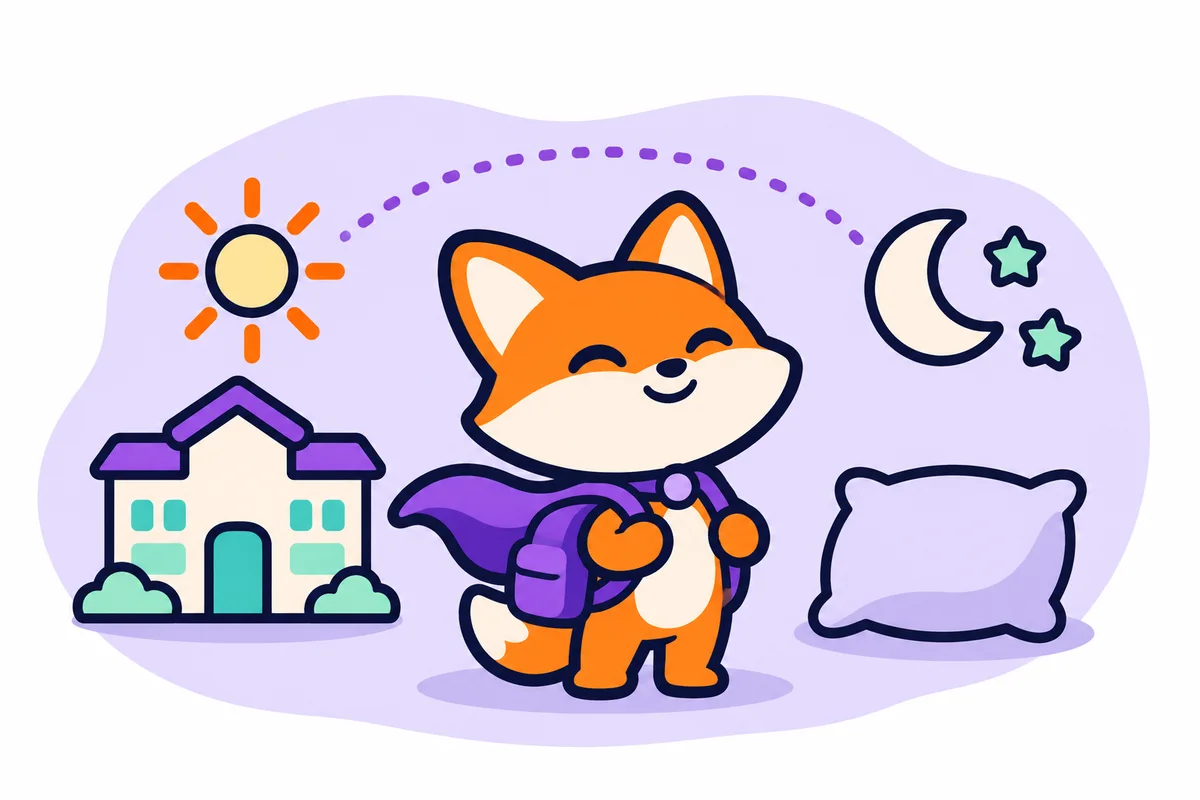
Daily time limits get most of the attention, but for many families the rules that matter most are about when, not how much: during lessons, and after bedtime. Schedules handle that automatically, so you are not the one switching things off every evening.
Limits and schedules are different tools
A limit is a budget: one hour of games a day, used whenever your child likes. A schedule is a window: from 9 pm to 7 am, chosen apps are paused whatever time is left. Most families end up using both: a schedule protects sleep and school, a limit keeps the rest of the day balanced.
A school-day schedule
- Pause games, video and social apps during lesson hours, Monday to Friday.
- Keep calls, messages to family, maps and school apps available.
- Leave breaks and the trip home alone at first. You can tighten later if you need to.
- Check your school's own phone policy. If phones are kept in lockers, a schedule may not be needed at all.
A bedtime schedule
- Start the pause 30 to 60 minutes before your child should be asleep, so winding down happens without a screen.
- Let it run past midnight to the morning. A good tool handles schedules that cross midnight without fuss.
- Consider a later start on Friday and Saturday. Agreeing on this up front avoids negotiating every weekend.
- If you can, charge phones outside the bedroom. No setting does that for you.
Make the rule visible
A blocked app with no explanation feels like a punishment. A blocked app that says “Bedtime until 7:00 am” is just a rule. In Koby, your child's own screen shows why an app is paused and what's coming next, so the schedule is not a surprise. You can read more on our page written for kids.
Handling “five more minutes”
Requests will come, especially in the first weeks. Some ideas that help:
- Agree in advance which moments are open to extra time (finishing a level) and which are not (bedtime).
- Ask for a reason. It is a small habit that makes requests more thoughtful.
- Answer quickly, yes or no. In Koby, unanswered requests expire after 30 minutes, and extra time adds to daily limits but never overrides school hours, bedtime or a pause.
Review after a month
Sit down together after a few weeks. What worked? What felt unfair? Adjusting a schedule because your child made a good case teaches more than any setting.